Customers often move between different support channels during their interactions. This can happen when an issue becomes more complex, when someone wants more privacy, or simply when it is more convenient to use another device or communication method. Scientific studies show that people pay close attention to the features of each channel. For example, some channels offer quicker responses, more privacy, or fit better with the customer’s current situation. You might start solving a problem through live chat but switch to a phone call if you need quick escalation. If your issue is sensitive, you may leave a public social media channel and continue the conversation in a private message. Research from NNG (2026) and ScienceDirect (2021) shows that people expect to keep making progress on their issue, no matter which channel they use.
Best practices for seamless channel transitions
To keep the customer journey smooth during channel switching, you need to keep all the context and guide the customer clearly. Here are some best practices:
Automated context transfer: Make sure agents on any channel can see all the customer’s details, past conversations, and case notes as soon as the channel changes.
Proactive notifications: Let customers know when their interaction is moving to another channel. Give clear instructions about what they should do next.
Persistent updates: Use automated messages, SMS, or email to update customers about responses or changes when they are not currently using the channel.
When you follow these steps, you reduce frustration. Customers do not have to repeat themselves, and they feel more confident in the support they receive. Academic studies show that smooth transitions between channels help more people complete their support requests and report higher satisfaction (ScienceDirect, 2021).
Ready to grow your business?
Start your free trial today and see results within days.
To give effective support across channels, agents need strong training. Good training programs should cover:
Context retention skills: Teach agents how to quickly review past interactions and use this information to deliver personalized support.
Empathy across channels: Help agents communicate with empathy, whether they are using chat, phone, or social media, especially when dealing with escalations or sensitive topics.
Scenario practice: Use real channel switching situations in training so agents become comfortable and skilled at handling these journeys.
Visual/actionable elements
Multi-channel journey scenario:
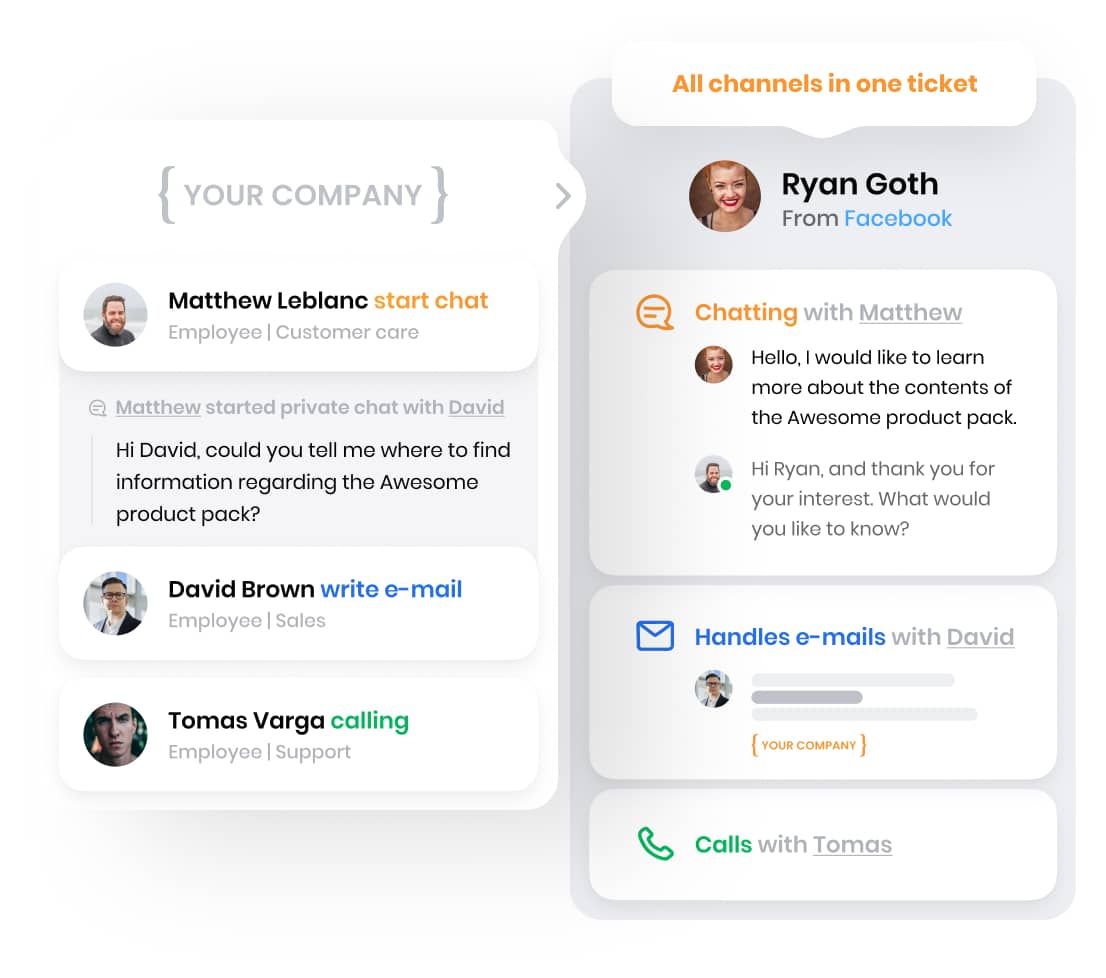
Imagine a customer starts a support request on social media. They move to chat for more detailed help, then finish the conversation over the phone. Throughout this journey, they do not need to repeat their issue, and the agent always has the full context.
Agent training checklist:
Access and review the full conversation history
Confirm the customer’s identity and issue details
Clearly explain any channel transitions
Respond in a personal and empathetic way
Ask for feedback after the issue is resolved
If you follow these practices, you can help organizations keep their support journeys smooth, efficient, and focused on the customer. This leads to better experiences and stronger customer relationships.
Measuring omnichannel support success
Key metrics and KPIs
To measure how well your omnichannel customer support works, you need to track key performance indicators across all channels. Here are the main metrics you should monitor:
Customer satisfaction (CSAT): You collect this score right after each customer interaction. It shows how customers feel about their experience on any channel.
Net promoter score (NPS): This measures how likely customers are to recommend your business to others. It gives you a big-picture view of customer loyalty.
First response time: This is the average time it takes your team to reply to new customer questions. You should measure this for each channel and overall to see how quickly you respond.
Resolution time: This tracks the time from when a customer first reaches out until their problem is solved. Fast resolution times help improve how customers view your support.
Channel effectiveness: You analyze which channels—such as email, chat, or phone—deliver the highest satisfaction, fastest solutions, or most engagement. Breaking these metrics down by channel helps you find which ones work best and where you can improve.
Gathering and using customer feedback
To improve your service, you need feedback from customers. Here are some effective ways to gather and use it:
Post-interaction surveys: Send short surveys right after a service interaction. These surveys let you capture honest customer opinions while the experience is fresh.
Cross-channel analytics: Collect and review data from conversations, survey ratings, and customer comments on all channels. This helps you see the complete customer journey.
Social listening: Monitor what customers say about your business on social media. This allows you to spot new issues and identify trends early.
Using data to optimize support operations
When you measure and analyze your KPIs regularly, you can spot patterns and make your support better. Here are some steps you can take using this data:
Root cause analysis: If you notice low satisfaction scores or slow resolution times, you can look for patterns in certain channels or situations. This helps you find and fix the main problems.
Process optimization: Use the data to improve how your team works. You might change workflows, move resources, or provide extra training to your agents based on what the data shows.
Quality assurance: Set clear benchmarks and standards for your team. Monitor performance in real time using dashboards, so you can quickly address any issues.
Visual/actionable:
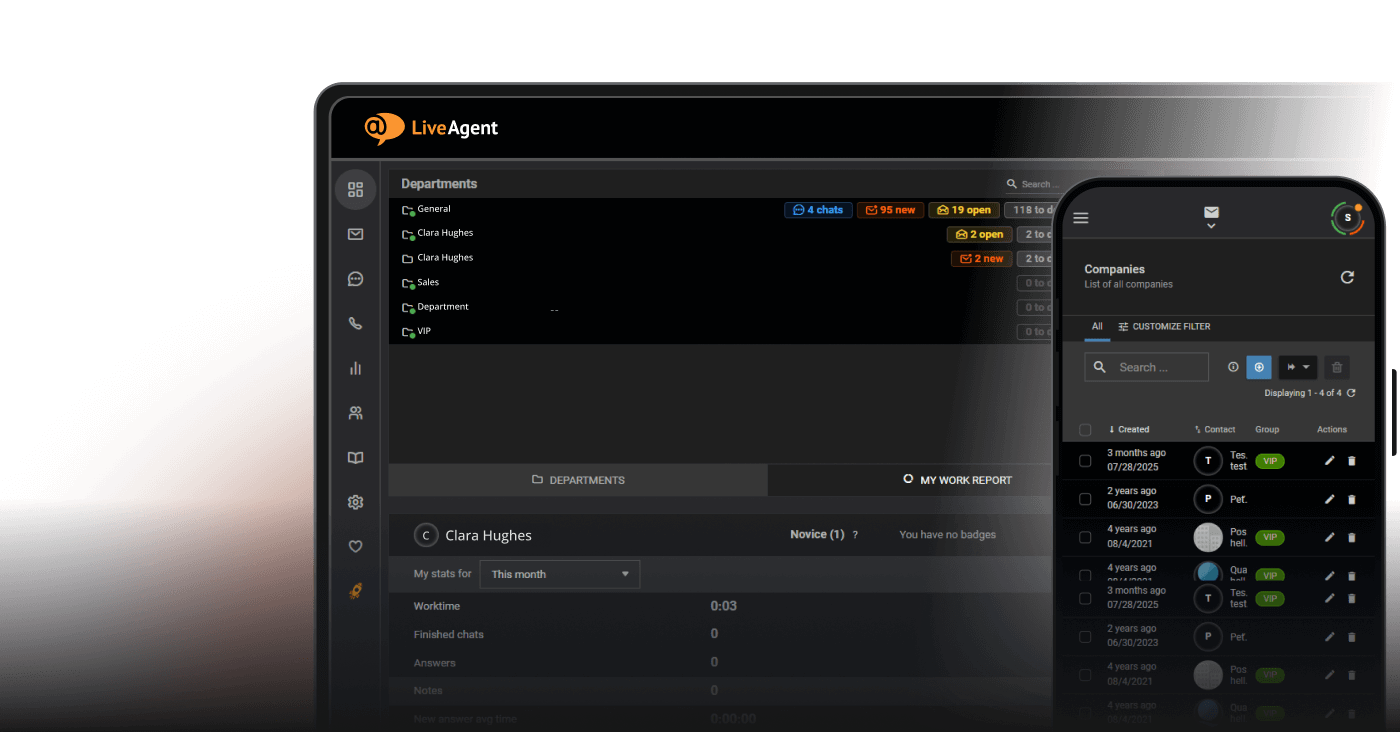
KPI dashboard: Set up a real-time dashboard to display your main metrics: CSAT, NPS, response times, resolution times, and channel effectiveness. Use color codes to make it easy to spot where you meet your targets and where you need to act right away.
By tracking these metrics and acting on feedback, you can improve your omnichannel customer support and deliver better experiences across every channel.
Share this article
Lilia is a copywriter at LiveAgent. Passionate about customer support, she crafts engaging content that highlights the power of seamless communication and exceptional AI-powered service.
Learn to provide jaw-dropping omnichannel support with 7 strategies: develop a strategy, enhance social media response times, promote self-service, use live cha...
Explore various support channels like email, live chat, phone, and social media to boost customer satisfaction with LiveAgent's multi-channel system. Improve re...